[UN Reform and the Future: Special Commentary] ⑤
The UN as a Platform for Public–Private Cooperation
in an Age of AI Convergence Across Politics, Society, and the Economy
iNews24 | 23 November 2026 | English translation
In a 2026 survey conducted by the Pew Research Center, a non-partisan, non-profit think-tank and public-opinion research organization based in Washington, D.C., 45,658 adults across 37 countries were asked about the United Nations. The median share expressing a favorable view was 55%. Favorable views stood at 74% in Sweden; 72% in both Indonesia and Kenya; 66% in Germany; 61% in South Korea; 54% in the United States; 49% in South Africa; and 36% in Japan. In South Korea, favorability fell by 13 percentage points, from 74% in 2025. These differences raise questions about the UN’s actual role and responsibilities.
The UN’s Role: A Global Community That Makes a Difference, Not Just a Nameplate
Article 1 of the UN Charter sets out the purposes of maintaining international peace and security and promoting international cooperation. According to UN data for 2026, the UN system provides food and assistance to more than 110 million people in over 120 countries and territories. Another strength is its ability to bring together 193 Member States to address peace, human rights, health, the climate crisis, and the digital divide. International relations scholar John Ruggie (2004) emphasized a ‘global public domain’ in which states, businesses, and civil society participate. The UN’s value is demonstrated not by the number of its buildings, positions, or regional offices, but by improvements in people’s lives and the principles it upholds.
On 19 November 2026, the leaders of the United States, China, and Russia issued a joint declaration on UN reform and strengthening the Organization’s international peace and security functions. However, they offered no concrete implementation measures, and agreement among the three countries alone does not guarantee the participation of all Member States or the effective implementation of reforms. Amid rapidly changing international circumstances, the UN must develop concrete reform measures and implementation plans not only for the distinctive mandates and functions of its organizations—including AI, the climate crisis, human rights, health, food, and labour—but also for personnel administration, management, international judicial mechanisms, and systems of administrative justice. It must then demonstrate implementation and results objectively.
UN80: Redesigning Performance and Governance, Not Merely Cutting Costs
The 2024 Pact for the Future committed to 56 actions covering peace, development, digital cooperation, future generations, and other areas. Launched in 2025 to mark the UN’s 80th anniversary, the UN80 initiative seeks greater efficiency, reviews of mandates, and organizational restructuring. A 2026 report proposed a 21% reduction in Secretariat posts and shared data use among 26 UN entities. The UN projected that funding for the UN system would decline by approximately US$16 billion (25%) between 2024 and 2026. Reductions in staffing and budgets are not achievements in themselves, nor should they leave gaps in support on the ground in developing countries.
First, overlapping responsibilities and functions among organizations must be avoided, and tangible results must be verified. Each organization’s distinctive mandate, programme effectiveness, budget execution, and results in the field should be evaluated objectively, with the findings disclosed to Member States and the public.
Second, implementation of oversight recommendations and administrative tribunal judgments must be ensured. Shared data should transparently disclose the status of implementation of recommendations by oversight bodies, including the Joint Inspection Unit (JIU), and judgments of administrative tribunals, clearly identifying the reasons for non-implementation and the corrective actions taken.
Third, the accountability of executive heads and substantive oversight by Member States must be strengthened. Barnett and Finnemore (2004) examined the authority of international bureaucracies and the risks accompanying that authority. The leadership of each organization should therefore explain and be held accountable for performance, compliance with rules, and implementation of oversight recommendations and judicial judgments, while Member States should monitor these matters continuously.
Ultimately, UN80 reform should aim not for a ‘smaller UN’ achieved simply by reducing organizational size, but for a ‘transparent and accountable UN’ whose performance and accountability can be objectively verified. If relocating or hosting the headquarters of existing UN organizations and specialized agencies is not realistically feasible, the priority should be to establish an international think-tank and multilateral cooperation platform that shares results and good practices in country-level assistance, develops independent evaluation indicators for UN entities, and advances joint research and policy improvements—rather than merely offering premises host UN affiliates with overlapping functions.
ITU Council Elections: Substantive Contributions Over Influence
In the ITU Council elections held on 16 November 2026 at the Plenipotentiary Conference (PP-26) in Doha, the United States received 158 votes (tied for seventh among the nine elected countries from the Americas); South Korea received 144 votes (tied for ninth among the 13 elected countries from Asia and Australasia); China received 139 votes (tied for eleventh); and South Africa received 112 votes (last among the 13 elected countries from Africa). Amid the war in Ukraine, Russia received 72 votes and failed to secure one of the five seats for Eastern Europe and Northern Asia. What do the relatively low rankings of major countries signify? Neither permanent membership of the UN Security Council nor the scale of financial contributions guarantees electoral support.
Because electoral competition and diplomatic alignments differ by region, these results cannot be characterized categorically as a vote of no confidence in major powers. Nevertheless, many Member States stressed transparency and accountability across several agenda items at the ITU Plenipotentiary Conference, particularly the timely submission of external audit reports and sufficient opportunities for Member States to review them. In this context, the role and substantive contributions of Council members toward improving governance may also have influenced the voting outcomes.
Member States—especially Council members—should therefore be assessed not merely by the size of their financial contributions or their diplomatic influence, but by how substantively they have contributed to fulfilling the ITU’s specific mandate and improving its internal governance. Assessment criteria should include concrete results in supporting developing countries, expanding universal service, strengthening independent oversight, and achieving transparent and accountable governance.
These principles should extend beyond the ITU to other UN organizations, reinforcing Member States’ contributions to fulfilling each entity’s distinctive mandate and functions, as well as their responsibilities for transparent governance and oversight.
The Way Forward: A Speaking Up Culture and Global Public–Private Cooperation
First, the UN and its specialized agencies pursuing UN80 reform should disclose objective, comparable, and verifiable indicators of costs, beneficiaries, and outcomes by mandate, together with personnel management and the implementation of audit recommendations. Member States should review these indicators regularly.
Second, Member States and staff must be free to raise concerns about internal governance, including financial matters, personnel, administration, and independent oversight. ‘Speaking Up’ becomes an established organizational culture only when concerns raised are reviewed independently and fairly and lead to meaningful corrective action—not when it remains a slogan. The interests of an organization are not identical to the personal reputation of its incumbent leaders. Allegations involving leadership, in particular, must be addressed through independent investigations, determinations based on evidence and due process, accountable corrective action, and measures to prevent recurrence.
Third, opportunities for businesses, universities, civil society, the media, and young people around the world to participate in jointly designing policies and independently verifying results should be expanded. The ‘Global AI Hub’ being pursued by South Korea could connect the AI capabilities of nine international organizations and five multilateral development banks to help address challenges in health, climate, and education, while narrowing the AI divide. However, the initiative does not entail relocating UN headquarters, and challenges remain in avoiding duplication with existing programmes, adequately reflecting local needs, and securing sustainable funding.
To this end, beneficiary countries and stakeholders from government, business, academia, and civil society should jointly determine major priorities and establish principles and procedures for cooperation that prevent and manage conflicts of interest. Abbott et al. (2015) show how international organizations can act as ‘orchestrators,’ connecting the capabilities of diverse actors and facilitating cooperation. Sustained media attention, along with the active participation and research of future generations, will also be important drivers of UN reform.
Meaningful UN reform is not about replacing existing institutions with new entities or merely offering premises to host UN-affiliated offices. Rather, it is about transforming the UN into a more effective, transparent, and accountable organization that delivers tangible results through international cooperation, solidarity, and multistakeholder partnerships; transparent and accountable leadership that fairly remedies wrongdoing in accordance with law and due process; and the sustained engagement, independent watchdog oversight, and cooperation of Member States, global citizens, and the media.
The Republic of Korea, in particular, should go beyond attracting international organizations or winning Council seats. Drawing on its accumulated experience in economic and technological development, its AI and digital capabilities, and its foundations in education and research, Korea should make substantive contributions—beyond declarations and slogans—to fulfilling the distinctive mandates of UN entities and reforming their internal governance.
Furthermore, in an era of AI convergence across politics, society, and the economy, Korea should establish an international cooperation platform connecting governments, businesses, academia, and civil society worldwide. It should lead independent research and evaluation and the development of verifiable indicators that enable each organization to assess its own performance objectively and pursue continuous reform. In doing so, the Republic of Korea should demonstrate global leadership by strengthening UN transparency and accountability and enhancing tangible results and public trust.
Original Korean article: https://www.inews24.com/view/2029199
AUTHOR PROFILE
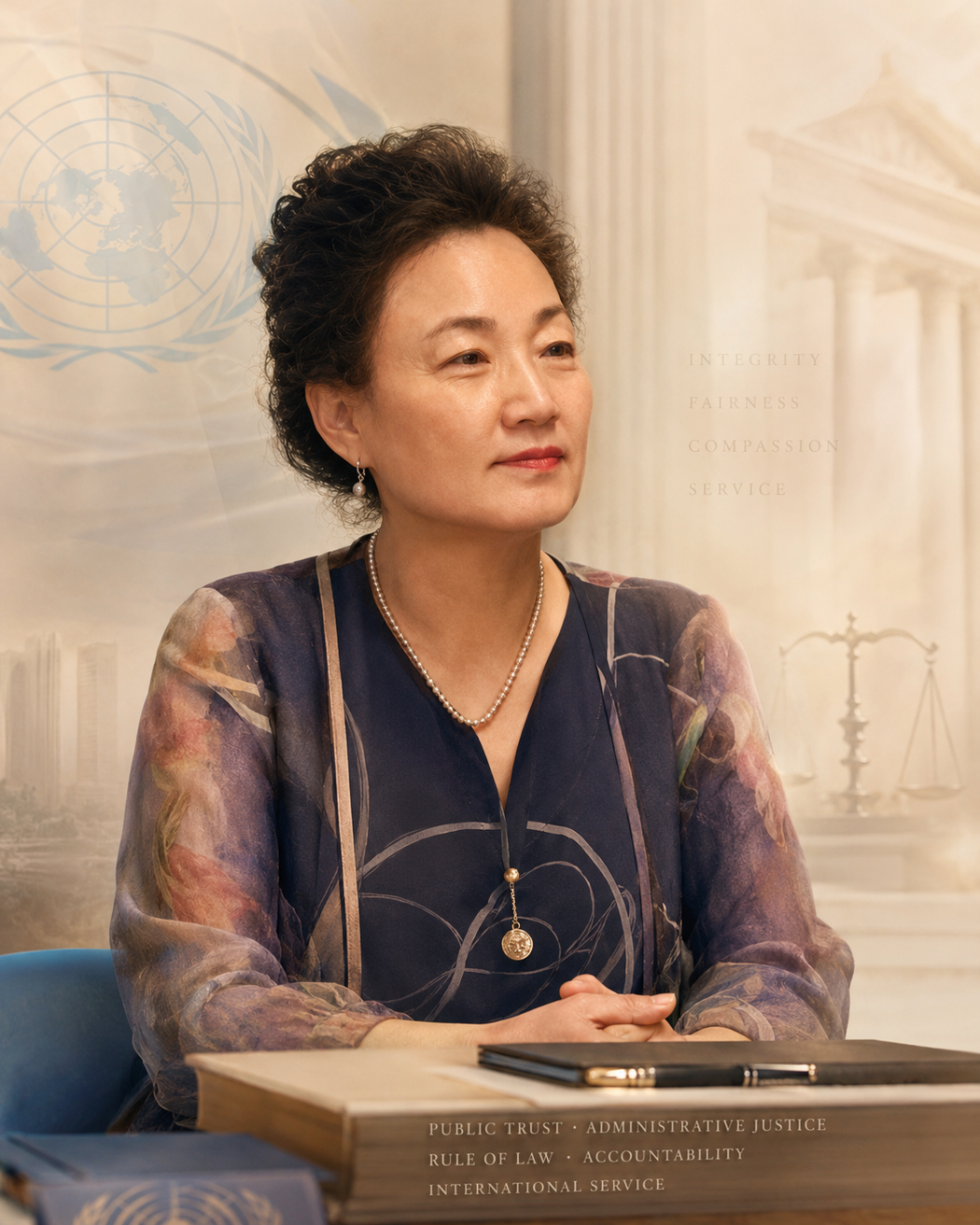
About the Author | Dr. Eun-Ju Kim
International ICT, AI and Digital Policy; UN and Diplomatic Affairs
Dr. Eun-Ju Kim is an expert in international information and communication technology (ICT), artificial intelligence (AI), digital policy, and UN and diplomatic affairs, with nearly 40 years of experience across the UN system, the public and private sectors, research institutions, and academia.
She holds a master’s degree from Seoul National University and a master’s degree and doctorate from the University of London, where her research focused on the United Nations, particularly the International Telecommunication Union (ITU) and UNESCO. She has also completed executive programmes in leadership, organizational management, development, and data science at Harvard Kennedy School, the University of Oxford, and UN knowledge centres.
From 2000 to 2025, she held senior positions at the ITU, contributing to international cooperation, digital development, and institutional innovation. She currently serves as Chair Professor at aSSIST University, continuing her work in teaching, research, and writing.
This six-part special commentary series examines the UN’s values and role, reform challenges, and the Republic of Korea’s potential contributions in the year of the UN’s 81st anniversary.